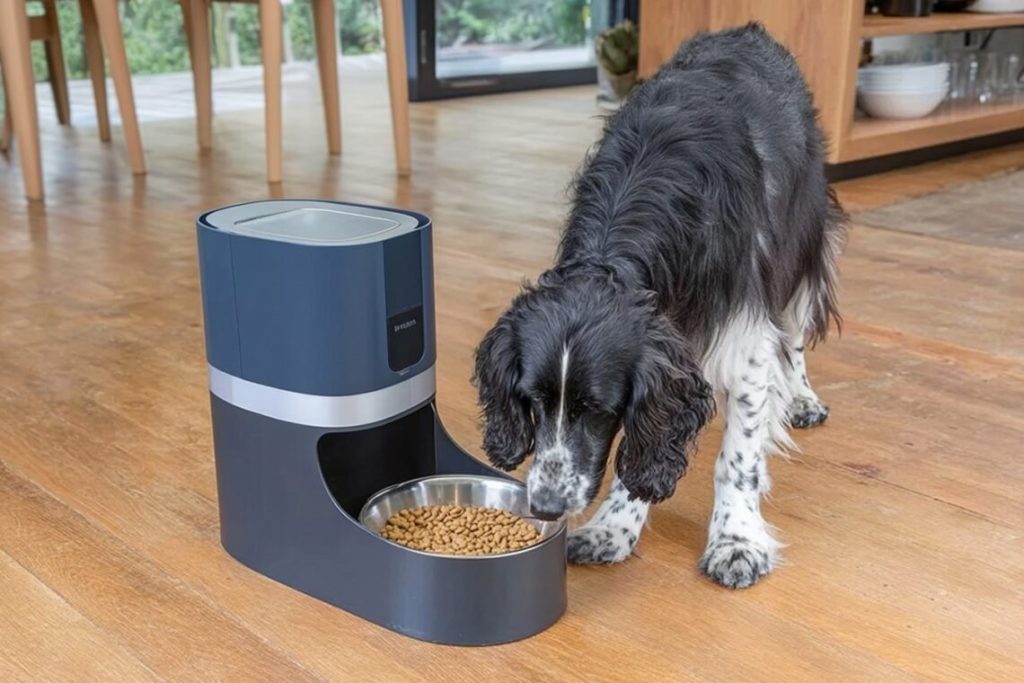
The best automatic dog feeder for large dogs needs a holding capacity of at least 6 litres, an anti-jam dispensing wheel that handles kibble up to 18 mm wide, and a heavy, tip-proof base. A reinforced locking lid stops strong jaws from breaking in, while a stainless steel bowl prevents bacterial buildup.
What Makes an Automatic Feeder Suitable for Big Breeds?
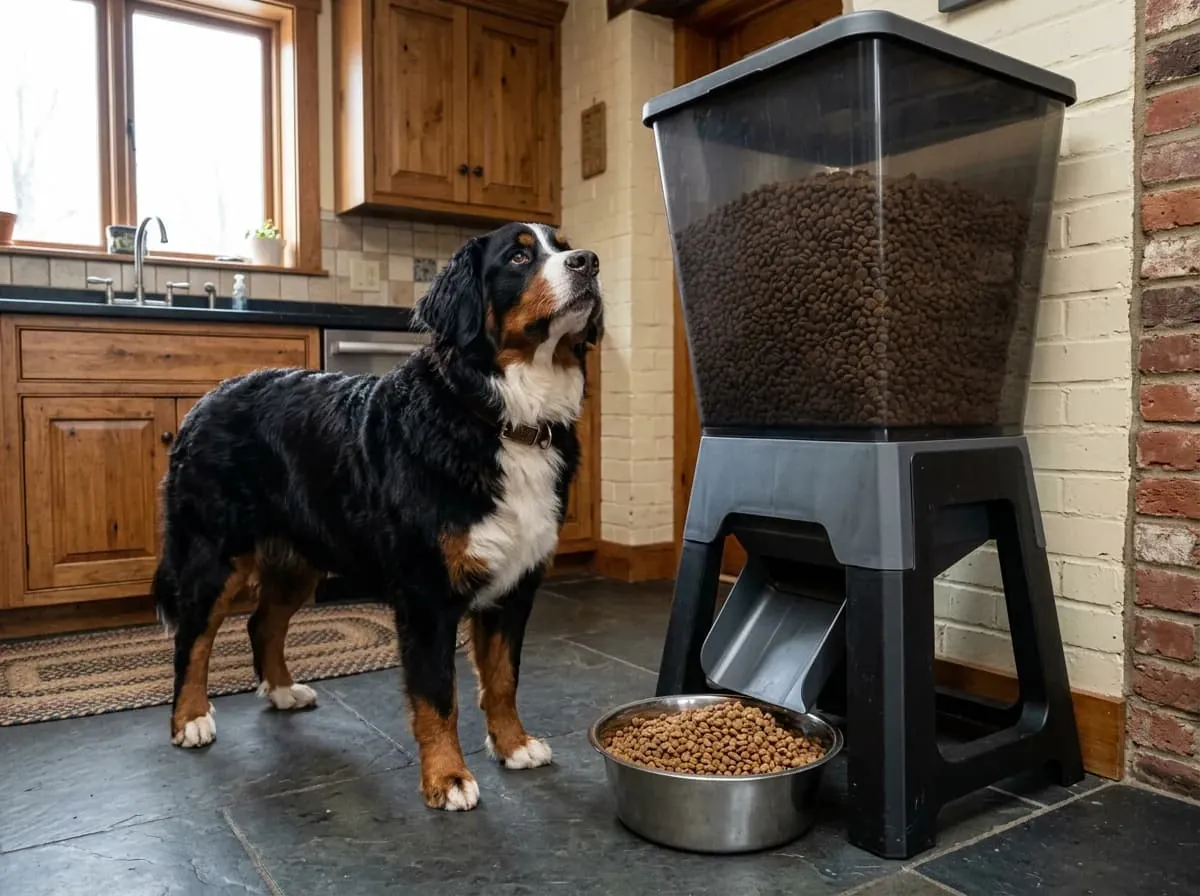
Large breeds require larger food portions. Standard feeders often choke on large biscuits, causing missed meals.
To handle a large dog, the unit must have three specific build features:
- Wide dispensing chutes: A narrow funnel jams when two large kibbles wedge together. Feeders designed for big dogs feature a clearance channel of at least 20 mm to ensure biscuits drop smoothly into the tray.
- Tamper-resistant hopper lids: Big dogs can easily nose open basic snap-shut lids. Look for twist-lock systems or push-button latches that require human grip strength to release.
- Low centre of gravity: Lightweight units slide across the floor or topple over when a heavy snout pushes against the bowl. The feeder body should either weigh down with a large reservoir of dry food or offer rubberised grip pads on the base.
If your pet eats kibble smaller than 12 mm, standard models might work; if your dog eats adult giant-breed biscuits, choose a machine built specifically for oversized dry food.
Which Feeder Features Matter Most for Large Breeds?
Matching your dog’s daily routine to the feeder’s mechanical limits ensures the device runs without constant supervision.
| Feature | Large Breed Requirement | Why It Matters |
|---|---|---|
| Kibble Size Limit | 15 mm to 18 mm | Stops large dry biscuits from jamming the rotor wheel. |
| Hopper Capacity | 6 to 9 litres | Holds roughly 5 to 7 days of daily rations for a 30 kg dog. |
| Power Source | Dual (Mains adapter + D-cell batteries) | Keeps meals dispensing on time during a household power cut. |
| Bowl Material | Food-grade 304 stainless steel | Resists deep scratches and prevents chin acne caused by plastic. |
| Maximum Portion Size | 200 g to 400 g per meal | Lets you feed a full meal in one cycle without scheduling multiple micro-portions. |
Tip: Tape the power cord inside a hard plastic cable protector or route it behind heavy furniture so your dog can’t chew through the wire.
How Do You Stop a Hungry Dog from Breaking In?
Large breeds possess immense jaw pressure and paw strength.
Place the unit against a corner wall. This prevents your pet from tipping it to dislodge kibble.
Choose a unit with an internal baffle door. This flap only swings open during an active motor cycle. The flap stays locked to prevent stolen snacks.
How to Set Up and Test Your Automatic Feeder
Setting up the machine correctly prevents skipped feedings and mechanical failure.
- Wash and dry the hopper thoroughly. Clean the food bucket and stainless steel bowl with warm water and mild soap, ensuring every part dries completely before adding food.
- Install fresh backup batteries. Fit the required alkaline batteries into the base compartment before plugging the unit into the mains wall socket.
- Measure your dog’s regular dry biscuit diameter. Check that the largest pieces of kibble fit comfortably within the manufacturer’s maximum size threshold.
- Calibrate the portion weight. Dispense three single test portions onto a kitchen scale to see how many grams your unit delivers per portion unit.
- Set the feeding schedule. Programme the timer clock to match your dog’s normal breakfast, lunch, and dinner times.
- Run a manual test feed while watching. Press the manual feed button and confirm that the rotor turns smoothly without crunching or wedging dry food against the housing.
Is an Automatic Feeder Safe for Dogs with Bloat Risks?
Yes, provided you choose an automatic feeder that offers a slow-feed or multi-interval dispensing mode.
Deep-chested breeds face a higher risk of Gastric Dilatation-Volvulus (GDV), or bloat. Guidance on preventing bloat from the PDSA vet charity on gastric torsion advises owners to feed several small meals throughout the day rather than one large portion.
A programmable feeder helps reduce this danger by breaking a single large meal into smaller portions dropped every 15 minutes. However, this device isn’t suitable for dogs who become frantic or aggressive around moving machinery.
How to Clean the Feeder Chute
Unplug the machine and empty dry food regularly; consult the manual for cleaning intervals. Wipe the internal chute with a dry microfibre cloth to remove kibble dust and grease. Never spray liquid cleaners directly into the motorized dispensing throat, as moisture will spoil the next batch of dry food and ruin the electronic sensors.
Related guides
Frequently Asked Questions
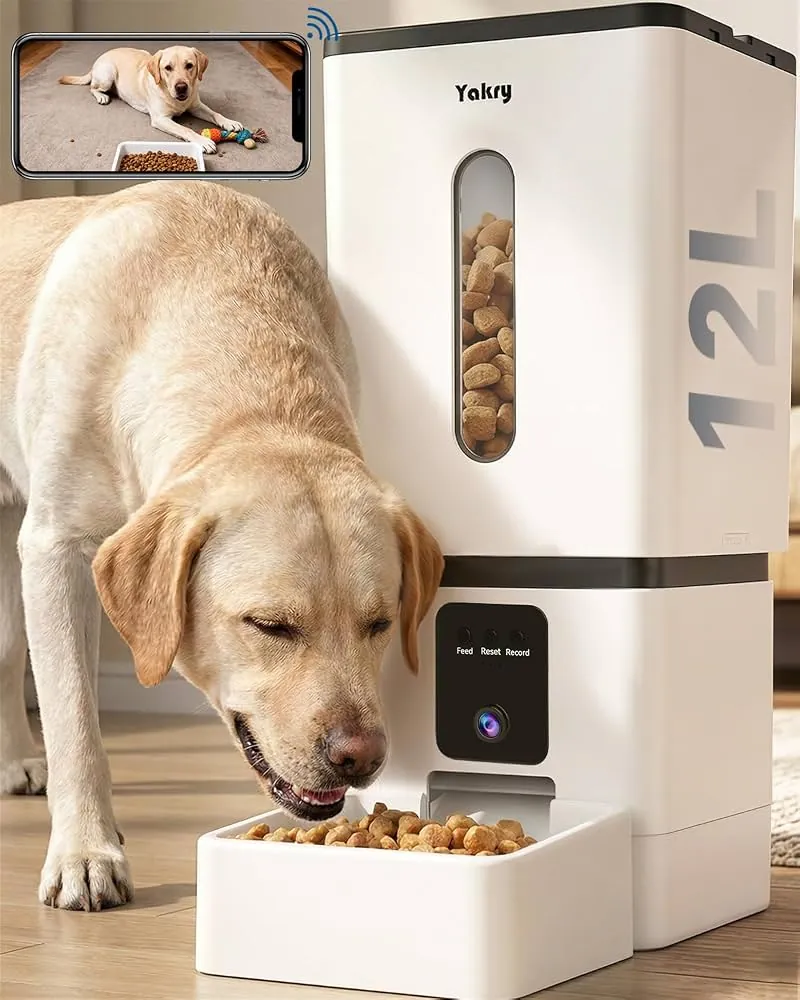
Can an automatic feeder handle wet or raw dog food?
No, standard hopper feeders only work with dry kibble. Wet food quickly spoils, blocks the rotating dispenser blades, and coats the internal electronics in moisture. If you feed wet or raw food, use an ice-pack chilled tray feeder with timed pop-up lids instead.
What happens if the home internet disconnects?
Your dog will still receive their meals on schedule. Once programmed, smart feeders store the timer settings directly on an internal memory chip. The unit only requires Wi-Fi when you want to change feeding times, adjust portion sizes, or trigger an unscheduled manual dispense from your phone.
How often should the storage hopper be washed?
Wash the hopper and lid every 30 days. Natural oils from dry pet food cling to plastic surfaces over time, turning rancid and spoiling fresh food added on top. Let all parts dry fully before refilling to stop mould spores from growing inside the container.
Conclusion
Weigh your dog’s typical meal on a digital kitchen scale before setting your feeder’s portion sizes, as kibble density varies widely between brands. Once you confirm the gram output per cycle, place the unit in a quiet corner to establish a steady, reliable feeding routine.
2 thoughts on “Best Automatic Dog Feeder for Large Dogs: Essential Features”