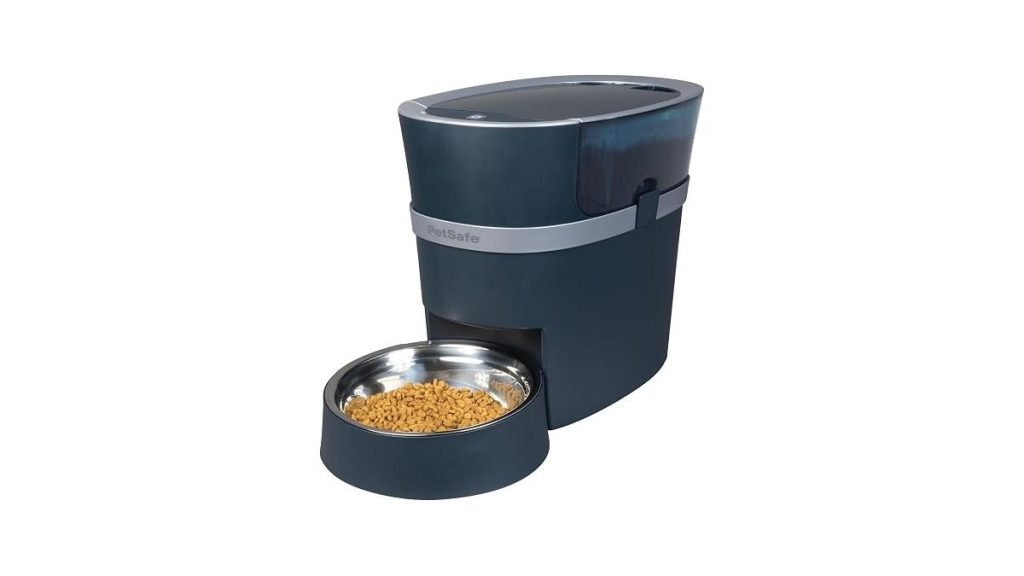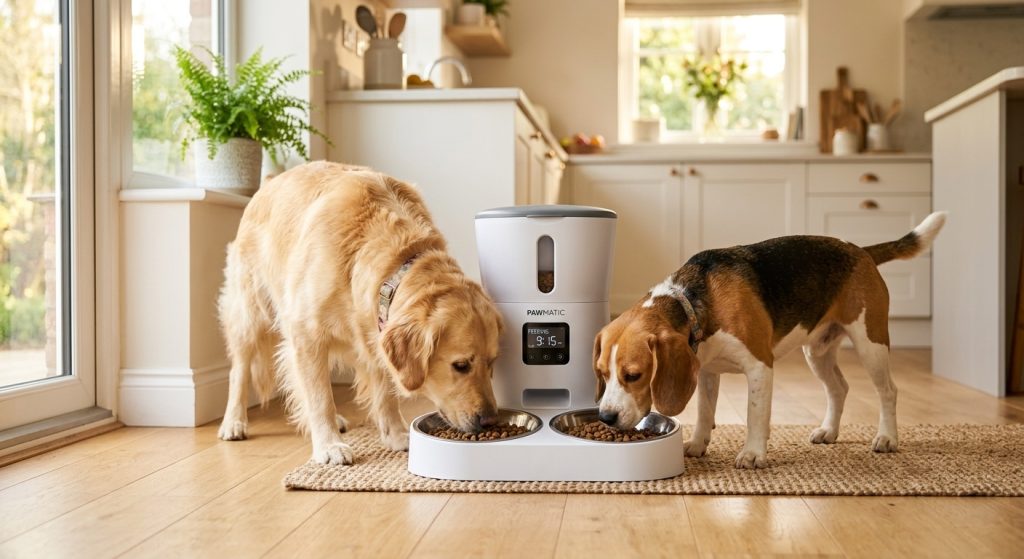
An automatic dog feeder for multiple dogs is a device designed to dispense specific portions of food to several pets at scheduled times. These units help maintain consistent feeding routines for households with more than one animal, though they vary primarily by their ability to identify individual pets using microchips.
Best automatic feeders for multiple dogs
Choosing the right system depends on whether you need to prevent food theft or simply automate a basic routine. The following table outlines the most common options available for pet owners.
| System Type | Primary Benefit | Example |
|---|---|---|
| Gravity Feeder | Simple, low-cost operation | Standard plastic hopper |
| Timed Dispenser | Consistent meal timing | Dual-tray rotating bowl |
| Microchip Feeder | Prevents food stealing | RFID-linked bowl lid |
| App-Controlled Unit | Remote feeding adjustments | Wi-Fi connected smart feeder |
Gravity feed systems
A gravity feeder relies on the physical weight of kibble to refill a bowl as the dog eats. This system suits owners of multiple dogs who have similar appetites and don’t require strict portion control.
- Provides a constant supply of food without electricity or batteries.
- Allows dogs to eat whenever they choose throughout the day.
- Reduces the need for manual refills compared to standard bowls.
This system is unsuitable if one dog eats faster than the others, as the dominant dog will consume the entire supply. For a pack of three large dogs, check the capacity daily to ensure it never runs empty.
Timed rotating dispensers
A timed rotating dispenser uses a motorised lid to reveal food at set intervals, which helps manage meal times for dogs that graze. This system suits owners who want to ensure each dog eats at the same time.
- Delivers specific meal portions at programmed times twice daily.
- Prevents dogs from eating their entire day’s food in one sitting.
- Operates on internal batteries for placement anywhere in the room.
If you have a dog that guards resources, this device won’t stop them from pushing others away. Setting a 200-gram portion for an 8:00 AM breakfast works well for two medium dogs, provided they’re supervised.
Microchip-activated feeders
A microchip-activated feeder only opens when it detects the specific RFID tag or microchip of an authorised dog. This system suits households where one dog is on a prescription diet or prone to stealing food.
- Locks the bowl lid when an unauthorised pet approaches.
- Ensures that only the intended dog accesses the specific food inside.
- Prevents weight gain in pets that attempt to steal extra portions.
This unit requires training for the dog to trust the opening mechanism. The [Pet Food Manufacturers’ Association] notes that measuring food intake is essential for preventing obesity, so ensure the bowl capacity matches your vet’s recommended daily intake.
App-controlled smart units
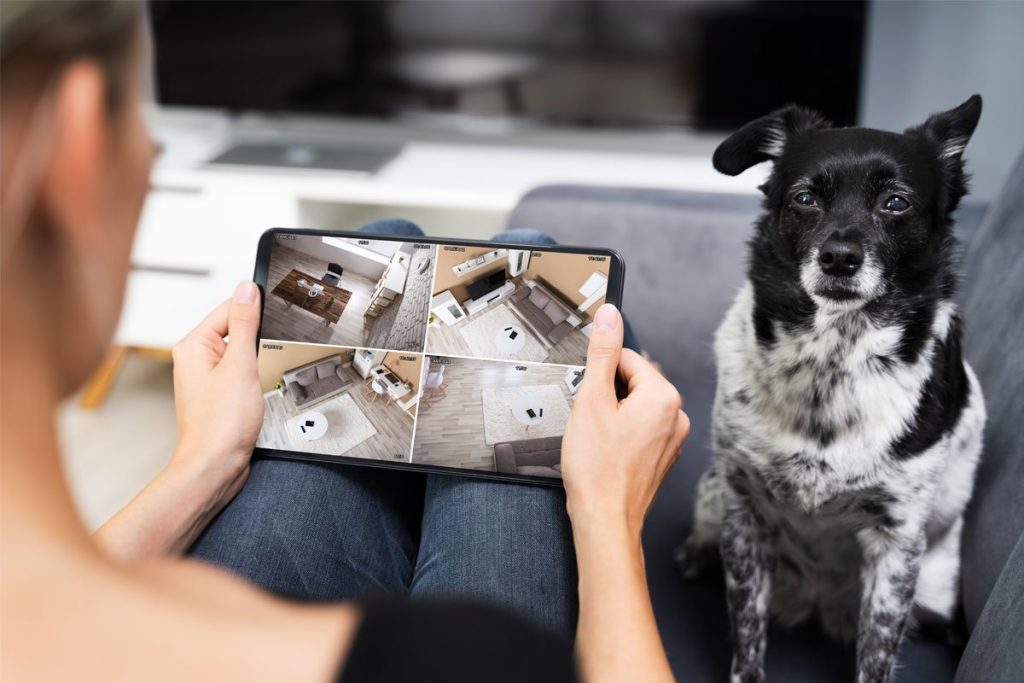
An app-controlled feeder allows you to monitor and adjust feeding schedules from your smartphone using a Wi-Fi connection. This system suits owners who travel frequently and need to adjust feeding schedules remotely.
- Sends real-time notifications to your phone when a meal is served.
- Allows for precise portion adjustments in 10-gram increments.
- Tracks the total amount of food consumed by your pets weekly.
This device relies on a stable internet connection, and if the Wi-Fi drops, you may lose the ability to trigger remote feedings.
Other feeding methods
- Manual Portioning: The most reliable way to monitor intake, using a calibrated measuring cup for each dog individually every morning.
- Separated Feeding Areas: Placing bowls in different rooms or using baby gates to ensure each dog eats their own food without interference.
- Puzzle Feeders: Stationary toys that release food slowly, which is useful for slowing down fast eaters to prevent bloat during mealtimes.
Choosing the right system
Deciding which unit to buy depends on your dogs’ behaviour and your daily schedule. If you have a dog on a special diet, you must choose a microchip-activated feeder to keep their food secure from others. If your dogs are non-competitive, a simple timed rotating dispenser is often enough to keep the peace. You should also consider your home layout; if you can’t separate your dogs, prioritise systems that restrict physical access to the bowl. Mixing these systems is possible, but avoid using gravity feeders alongside restricted systems, as the open food will cause conflict.
Frequently asked questions
Is it safe to leave dogs alone with an automatic feeder?
Yes, it’s safe, provided the device is stable and the cords are secured. Check the manufacturer’s manual to ensure the unit is rated for the size and temperament of your specific pets.
How do I stop one dog from pushing the others away?
The only reliable way to stop food stealing is to use a microchip-activated feeder. These units stay locked until the specific dog with the registered microchip approaches the bowl.
How often should I clean an automatic feeder?
You should clean the food bowl and dispenser parts every 3 to 7 days. Bacteria grow quickly in lingering food residues, so wash removable trays in warm, soapy water weekly.
Can I feed wet food in an automatic dispenser?
You can use wet food only in dispensers designed for it, which usually include ice packs to keep the food cool. Standard dry-food dispensers will cause wet food to spoil.
How long do the batteries last in these units?
Battery life typically lasts 3 to 6 months depending on the frequency of use. Check the indicator light on the control panel weekly to ensure the power remains sufficient.
What happens if the power goes out?
Most units continue to run on internal battery backups for several days. If your model lacks a battery backup, the feeder will stop and you must manually serve the next meal.
Conclusion
Start by observing which dog eats faster and if anyone is stealing food. If you notice a dog gaining weight or pushing others aside, switch to a microchip feeder immediately. If the device stops opening or makes a grinding sound, stop using it and contact the manufacturer for support.
Related guides