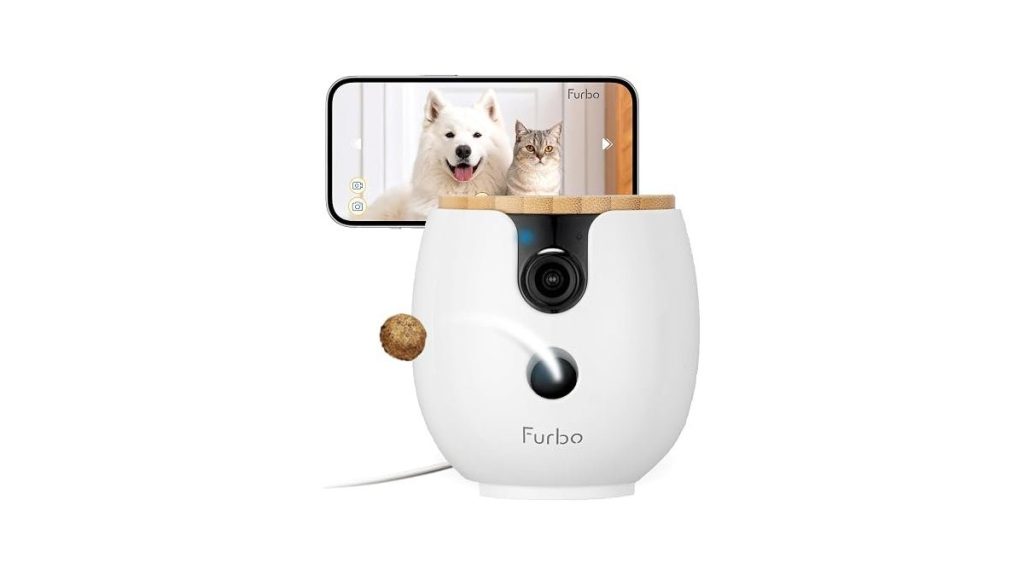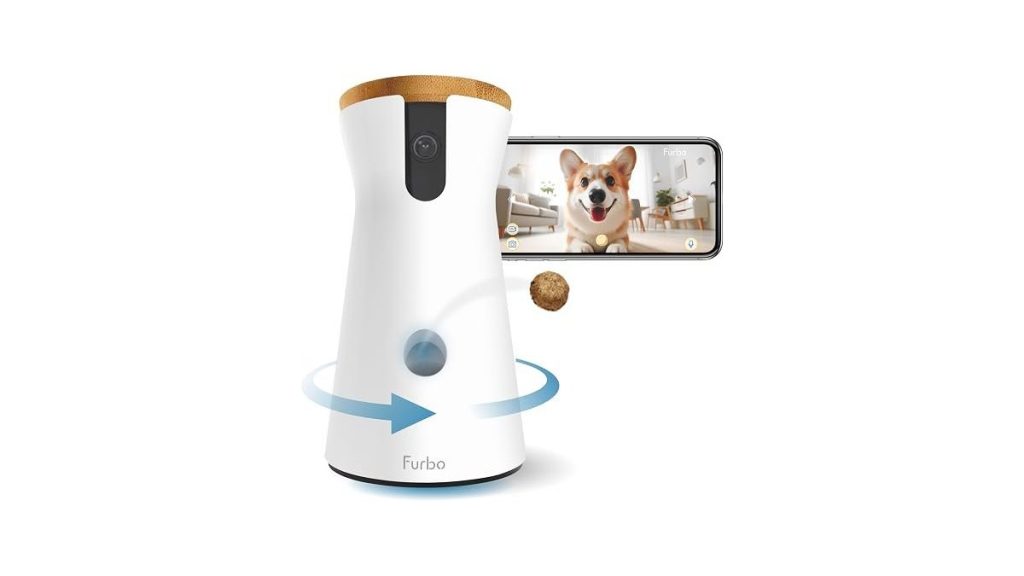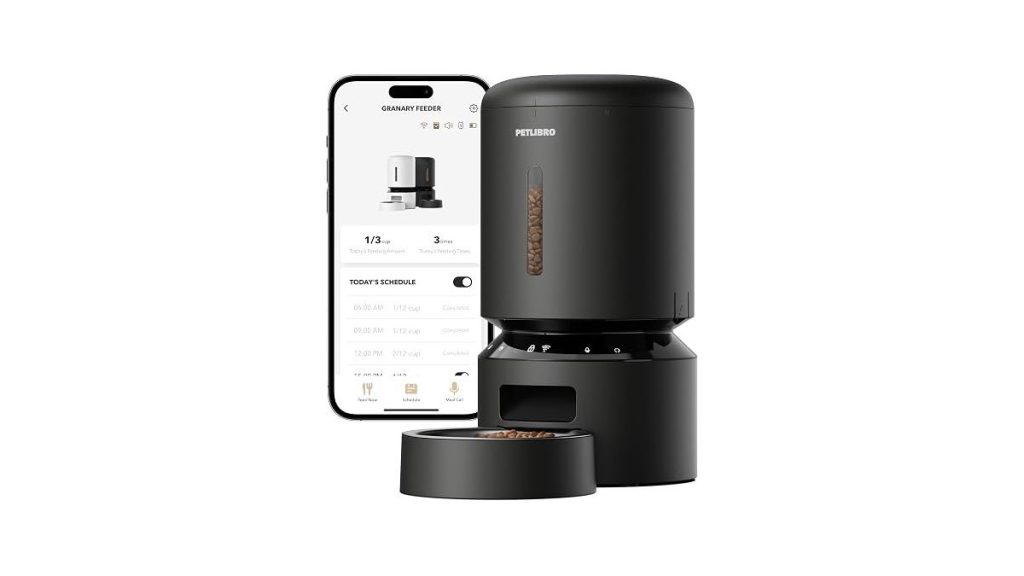
Finding the right Automatic Pet Feeder can feel like a chore because there are so many options. Some models focus on clever tech, while others focus on keeping food fresh or stopping pets from stealing each other’s meals. This guide cuts through the noise to show you which features truly impact your pet’s daily routine. The listings were compared on their own listed specs regarding reliability, capacity, and the specific needs of your home setup. For most pet owners, the PETLIBRO WiFi Automatic Feeder is the top pick because it balances smart scheduling with a design that keeps food fresh.
As an Amazon Associate, we earn from qualifying purchases. This post contains affiliate links – if you buy through them, we may earn a commission at no extra cost to you.
What Actually Matters
Food Freshness and Storage
The way a machine seals is vital for dry food, which can go stale or lose crunch if exposed to air. Look for models with a twist-lock lid and a desiccant bag compartment, as these create a barrier against moisture. For wet food, standard dispensers won’t work; you need a device that uses active cooling to prevent bacteria growth. Always check if the food-contact parts are dishwasher-safe, as regular cleaning is the best way to keep your pet healthy and prevent chin acne.
Power Reliability
An automatic feeder is only useful if it works when you aren’t home. Most units now offer a dual-power system, using both a wall adapter and backup batteries. This is essential for busy owners. If the power cuts out, the battery backup ensures your pet still gets their scheduled meal. Before you buy, check which battery size is required and ensure the unit switches to battery power automatically. You can read more about safe pet food handling on the official FDA website.
Portion Control and Anti-Jam
Consistency is key for weight management. A good feeder should let you set exact portions to avoid overfeeding. If your pet eats quickly, look for a model with a slow-release feature or one that divides meals into smaller increments. Anti-jam technology is equally important; this usually involves a rotor design that prevents kibble from getting stuck. Check the maximum kibble size listed for the feeder to ensure it matches the food you currently buy for your cat or dog.
Multi-Pet Dynamics
If you have more than one pet, you face the risk of one animal stealing food from another. Selective feeders that recognise a specific microchip or RFID tag are the best solution here, as they only open for the assigned pet. If you have two pets who eat at the same time, look for dual-bowl models that split food evenly. This simple feature stops competition and ensures each pet receives the correct amount of food without unnecessary stress.
1. PETLIBRO WiFi Automatic Feeder

Best for: Most cat and dog owners.
The PETLIBRO WiFi Automatic Feeder is our top pick because it covers all the basics with ease. The app control is simple to use, and the ability to schedule up to 10 meals a day is more than enough for most pets. The stainless steel bowl is a great touch for hygiene, and the twist-lock lid ensures that your cat or dog can’t get into the food tank early.
The trade-off here is that it requires a stable WiFi connection for the smart features to work perfectly. If your home has poor signal, you might find the scheduling setup less responsive. It’s a solid, reliable unit for someone who wants to manage feeding from their phone. This model isn’t the right choice for pets on specific medical diets who need to be kept away from other pets.
Pros
- Reliable app-based scheduling
- Stainless steel bowl included
- Twist-lock lid prevents stealing
- Clear low-food notifications
Cons
- Requires stable WiFi for setup
- No camera feature included
2. Sure Petcare Microchip Feeder

Best for: Households with multiple pets.
By reading your pet’s existing microchip, it ensures only the authorised animal can access the food. This is essential if one pet is on a prescription diet or if you have a “food thief” in the house. The lid forms a seal to keep wet or dry food fresh, which is a major advantage for picky eaters.
The trade-off is that this is a single-pet device. You’ll need one for every cat or dog that requires controlled feeding, which can take up significant floor space. It isn’t a bulk dispenser, so you must fill the bowl manually. This feeder isn’t for owners who want a “set it and forget it” machine that holds weeks of food.
Pros
- Prevents food stealing between pets
- Works with existing microchips
- Suitable for wet food
- Retains moisture well
Cons
- Holds less food than dispensers
- Requires one unit per pet
3. PETLIBRO Automatic Wet Food Cat Feeder 2026 New Version
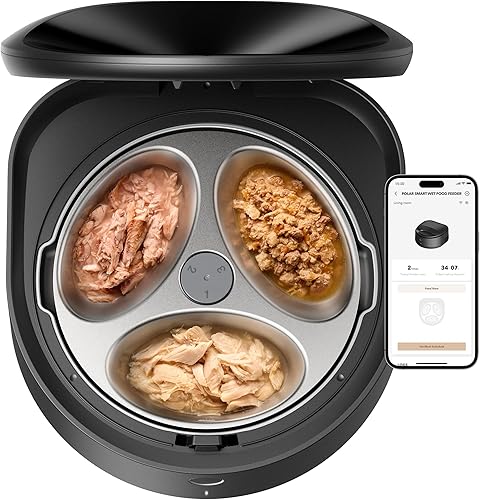
Best for: Serving wet food safely.
This is a specialised piece of kit for owners who prefer feeding wet food. The semiconductor cooling system keeps meals fresh for up to 72 hours, which is much more reliable than simple ice packs. The stainless steel tray is easy to remove and clean, and the anti-pinch sensors are a smart addition for safety.
Pros
- Advanced semiconductor cooling
- Dishwasher-safe stainless tray
- Safety sensors prevent pinching
- App-controlled meal times
Cons
- Limited to three meals
- Frequent manual refills required
4. Smart WiFi Camera Feeder

Best for: Owners who want to watch their pets.
If you miss your pet while at work, the Smart WiFi Camera Feeder is a great companion. The 3MP HD camera and two-way audio let you check in and even talk to your pet. It includes motion alerts, which can be useful if you want to know exactly when your pet is eating.
The trade-off is the complexity of the setup; it’s more than just a feeder, so you have to manage both the camera and the feeding schedule. It also requires an SD card for video storage. This model isn’t for someone who wants a simple, no-frills device, as the extra technology adds more points where a connection might fail.
Pros
- Clear HD camera and audio
- Motion detection alerts
- Two-way interaction
- Solid 4L capacity
Cons
- Requires SD card for video
- Complex setup for some users
5. PETLIBRO Automatic Cat Feeder

Best for: Two-cat households.
The PETLIBRO Dual Feeder solves the problem of competition by splitting food into two separate bowls. It’s essentially the same reliable tech as the single version but adapted for two pets. The airtight storage and stainless steel bowls make it a very hygienic choice for busy homes.
The trade-off is the physical footprint; it’s wider than a standard feeder and needs more space in your kitchen. While it prevents fighting, it doesn’t stop a very determined pet from leaning over and eating from the other bowl. This isn’t the right choice for pets who need strictly separate, monitored diets.
Pros
- Even food distribution
- App control for multiple users
- Airtight storage
- Stainless steel bowls
Cons
- Wide footprint takes space
- Doesn’t stop food stealing
6. Large Breed Automatic Feeder
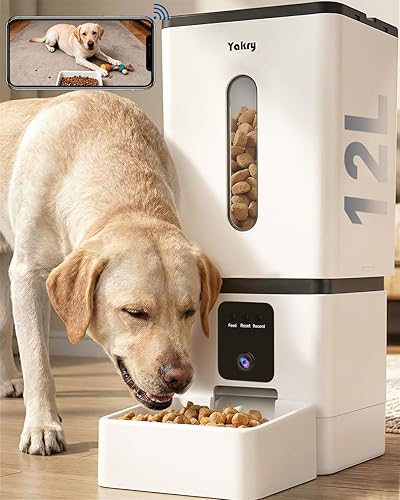
Best for: Large dogs.
This feeder is built for size, with a 12L capacity that can hold enough food for a large dog for up to two weeks. It’s designed to handle larger kibble sizes up to 20mm, which is a common pain point for other dispensers.
Pros
- Massive 12L capacity
- Handles large kibble
- Built-in HD camera
- Long-term food storage
Cons
- Large, bulky design
- Too big for small pets
7. PetSafe Healthy Pet Simply Feed Auto Feeder

Best for: Reliability without WiFi.
The PetSafe Healthy Pet Feeder is a robust, mechanical choice for owners who prioritise consistency over connectivity. It allows you to schedule up to 12 meals daily, with portions ranging from 1/8 cup to 4 cups. This flexibility is ideal for managing weight in cats and small to medium-sized dogs.
If your pet eats too quickly, select the slow-release option. This dispenses meals larger than 1/8 cup gradually over 15 minutes to prevent digestive upset. The design is pet-proof, stopping sneaky animals from accessing food before the scheduled time.
You must decide between battery power using 4 D-cell alkaline batteries or a wall adaptor, which is sold separately. If you need to stop the schedule temporarily, use the ‘Pause Feed’ feature without losing your settings.
The trade-off is the lack of modern smart features. You can’t monitor the device from your phone, and all adjustments require manual programming on the unit itself. It isn’t for the owner who requires remote access or real-time notifications.
Pros
- Very reliable hardware
- Slow-release for fast eaters
- Large 24-cup capacity
- Dishwasher-safe parts
Cons
- No WiFi or app
- Manual programming only
8. Anti-Jam 3L Feeder
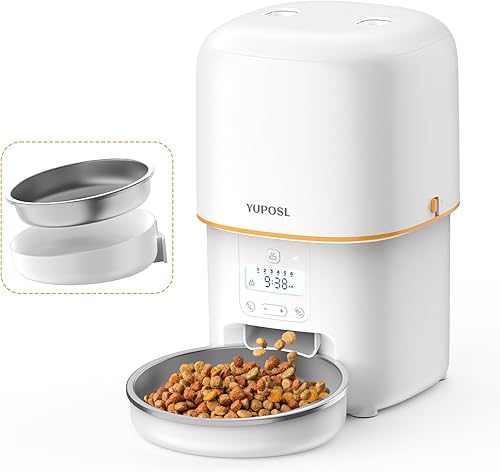
Best for: Small pets and compact spaces.
The Anti-Jam 3L Feeder is perfect for smaller living areas. The listing doesn’t mention how long the 3L capacity will last for a specific pet. The standout feature is the battery life, which can last up to 180 days, making it the best “set and forget” option for someone who doesn’t want to deal with cables.
The trade-off is the lack of WiFi. You have to program it manually via the LCD screen. While it’s very simple to use, it doesn’t give you the remote flexibility of the smart models. It isn’t for the owner who wants to adjust feeding times while away from home.
Pros
- Extremely long battery life
- Compact, space-saving design
- Anti-jam rotor technology
- Very easy to clean
Cons
- No app or WiFi
- Manual settings only
9. PetSafe 5 Meal Feeder

Best for: Simple, tray-based feeding.
The PetSafe 5 Meal Feeder is a simple tray-style unit. You fill the five compartments, and it rotates to reveal each meal at the scheduled time. It’s perfect for portion control and managing weight for small to medium pets. The first meal is ready immediately, while you can schedule the remaining four.
The trade-off is that it doesn’t store extra food; once the five meals are gone, the unit is empty. It isn’t a bulk dispenser. This isn’t for long-term travel or owners who want to fill the machine once a month. Because it holds only 1 cup per compartment, it’s best suited for cats or smaller dogs.
If your pet eats too quickly, use this to break meals into smaller portions. You can press the “feed now” button for an extra meal or suspend the schedule without losing your settings. The tray is dishwasher safe, but remember that you’ll need 4 D-cell batteries to keep it running.
Pros
- Simple tray rotation
- Great for weight management
- Dishwasher-safe tray
- Good for small pets
Cons
- Limited to five meals
- No bulk storage
10. WOPET Timed Food Dispenser

Best for: Voice interaction.
The WOPET Timed Food Dispenser is built to keep your pet calm. The ability to record a 10-second voice message that plays at mealtime is a great way to ease separation anxiety. It also features a reliable dual-power system, using both an adapter and backup batteries, to ensure no meals are skipped during power outages.
The 3L tank holds 12.6 cups of dry kibble. You can schedule up to 6 meals per day, with each portion set at approximately 15g. This precise control helps prevent overeating.
The trade-off is that it lacks the advanced app features found in the PETLIBRO range. It does the job well, but the interface is basic. This isn’t for owners who want analytics or camera monitoring. If you need remote video, look elsewhere.
Pros
- Personalized voice recording
- Reliable dual-power supply
- Easy to clean tank
- Good for small pets
Cons
- Basic app interface
- No camera or advanced sensors
Who Should Buy Which
If you’re a busy professional who travels often, the PETLIBRO WiFi Automatic Feeder is the most versatile choice, allowing you to schedule up to 10 meals daily via smartphone. If you need to monitor your pet while away, the faroro camera-equipped feeder provides 1080P video and two-way audio.
For those with a multi-pet home where one pet is a “food thief,” the Sure Petcare Microchip Feeder is the only way to ensure each animal gets their own meal. It uses RFID tags or microchips to open only for the assigned pet. If you have a household with several animals but want a single dispensing unit, the PETLIBRO Dual Feeder splits portions into separate bowls to prevent competition.
If your pet has health issues requiring wet food, the PETLIBRO Refrigerated Wet Feeder is the only safe option, keeping meals cool for 72 hours. For large breed owners, the Yakry 12L feeder handles kibble up to 20mm. If you value simplicity, the Yuposl 3L feeder offers a compact, long-lasting battery solution that requires no WiFi.
Mistakes That Catch Buyers Out
Choosing a large-capacity feeder for a small pet often leads to stale food, as kibble sitting in a 12L tank for weeks loses its crunch. Always match the hopper size to your pet’s daily intake to ensure freshness.
Assuming every device handles wet food is a common error; most dispensers, such as those with rotors, are strictly for dry kibble. If you need to serve wet meals, look specifically for refrigerated models.
Ignoring the kibble size limit is a frequent mistake that causes the machine to jam while you’re away. Check your kibble diameter against the feeder’s specifications, which usually range from 2mm to 20mm.
Finally, overlooking the battery backup requirement leaves your pet without food during a minor power cut. Always install backup batteries alongside your wall adapter to guarantee consistent service.
Related guides
Frequently Asked Questions
Do these feeders work with all types of kibble?
No, most feeders have a specific kibble size limit. You must check the listing to see if your food fits. The listing specifies that the maximum diameter is usually between 2mm and 20mm, which is the most important step before you buy.
Can I use these feeders for both cats and dogs?
Yes, most are suitable for both, but you must consider the size and the dispenser capacity. A large dog will empty a 3L feeder very quickly, while a cat may struggle to reach into a 12L hopper. Match the capacity and bowl height to your pet’s size to ensure they can eat comfortably without frustration.
How often do I need to clean an automatic feeder?
You should aim to clean the food tank and bowl at least once every two weeks. Oils from the kibble can build up and become rancid, affecting the taste and health of your pet. Always look for units with dishwasher-safe parts, as this makes the process much easier and ensures you don’t miss hidden corners.
What happens if the WiFi goes down?
Most smart feeders will continue to run on their internal schedule even if the WiFi disconnects. The app is usually used for setup and monitoring, not for the actual timing of the meals. However, you’ll lose the ability to change settings or get notifications until the connection returns, so check if your model stores the schedule locally.
Are these feeders safe for pets with separation anxiety?
They can be very helpful. Models with voice recording features allow you to play a familiar message, which can comfort a nervous pet at mealtime. If your pet is extremely anxious, a model with two-way audio and a camera is even better, as it allows you to see and speak to them directly.
Conclusion
Choosing the right device doesn’t have to be stressful once you focus on what your pet needs most. Take a moment to measure your cat or dog’s daily portion sizes today, then check the dimensions of your chosen model. You’ll find that a little preparation makes your pet’s transition much smoother.